
Reserve Commercial Real Estate LLC Archives - Reserve Commercial Real Estate LLC

Insights

Subleasing Office Space: Tips for Success

How to Maximize Opportunity in Today’s Evolving Office Market

As the office market continues to evolve, subleasing has become one of the smartest and most strategic tools for both tenants and businesses navigating change.

Whether you’re a company with excess space or a business looking for a flexible, cost-effective office solution, subleasing offers unique advantages—but only if approached correctly.

At Reserve Commercial Real Estate, we’re seeing a significant increase in sublease activity across Florida, driven by hybrid work trends, shifting space needs, and companies prioritizing efficiency.

Why Subleasing Is Trending Right Now

Today’s office users are thinking differently about space.

  • Companies are downsizing or restructuring footprints
  • Startups and growing businesses want flexibility
  • Tenants are seeking shorter-term commitments
  • High-quality, built-out spaces are becoming available

Subleasing creates a win-win:
Existing tenants reduce overhead, while new tenants gain access to turnkey space—often at below-market rates.

Tip #1: Understand Your Lease Before You Sublease

If you’re the current tenant, your first step is reviewing your lease agreement.

Key questions include:

  • Is subleasing permitted?
  • Does the landlord need to approve the subtenant?
  • Are there profit-sharing clauses?
  • What are your ongoing liabilities?

💡 Many tenants are surprised to learn they remain financially responsible even after subleasing.

Tip #2: Price Strategically

Sublease pricing is often more competitive than direct leases—but it still needs to be positioned correctly.

Factors to evaluate:

  • Remaining lease term
  • Condition of the space
  • Furniture and buildout included
  • Current market rates

Pricing too high can stall interest. Pricing strategically can move a deal quickly.

Tip #3: Market the Space Effectively

Sublease opportunities don’t always get the same visibility as direct listings—so strong marketing is essential.

That includes:

  • Professional photos and video
  • Clear property positioning
  • Highlighting turnkey features
  • Targeting the right tenant audience

Tip #4: Look for Turnkey Advantages (For Subtenants)

If you’re searching for space, subleases can offer serious advantages:

  • Existing furniture and layout
  • Immediate occupancy
  • Reduced buildout costs
  • Shorter lease commitments

This is especially valuable for businesses that need to move quickly or want to conserve capital.

Tip #5: Negotiate More Than Just Rent

Subleases often provide flexibility that traditional leases don’t—but only if negotiated properly.

Important considerations:

  • Renewal options
  • Expansion flexibility
  • Furniture inclusion
  • Operating expense responsibilities
  • Early termination clauses

💡 The structure of the deal matters just as much as the price.

What Subleasing Looks Like in Today’s Market

Here’s a real-world look at how office subleasing is evolving:

The Biggest Mistake to Avoid

Whether you’re subleasing your space or stepping into one, the biggest mistake is treating it like a simple transaction.

Subleases involve:

  • Multiple parties
  • Layered lease structures
  • Legal and financial risk
  • Timing sensitivities

Without proper guidance, small oversights can turn into costly issues.

Why Work With Reserve Commercial Real Estate

At Newmark Commercial, we simplify complex transactions and protect your interests.

We help clients:

  • Navigate lease restrictions and approvals
  • Market sublease space effectively
  • Identify high-quality opportunities
  • Negotiate favorable and flexible terms
  • Avoid hidden risks

With over 20 years of experience, our team delivers world-class service with VIP-level attention, ensuring every detail is handled so you can stay focused on your business.

The Bottom Line

Subleasing isn’t just a backup plan—it’s a strategic opportunity.

In today’s office market, the right sublease can:

  • Reduce costs
  • Increase flexibility
  • Accelerate timelines
  • Unlock high-quality space

But success depends on how the deal is structured.

Ready to Explore Sublease Opportunities?

Whether you’re looking to sublease your current space or secure a turnkey office, Reserve Commercial Real Estate is here to guide you every step of the way.

📞 Call 561-702-8187

Let’s position your business for success—with the right space and the right strategy.
Why Tech Companies Keep Choosing Southeast Florida — And What It Means for Your Office Search

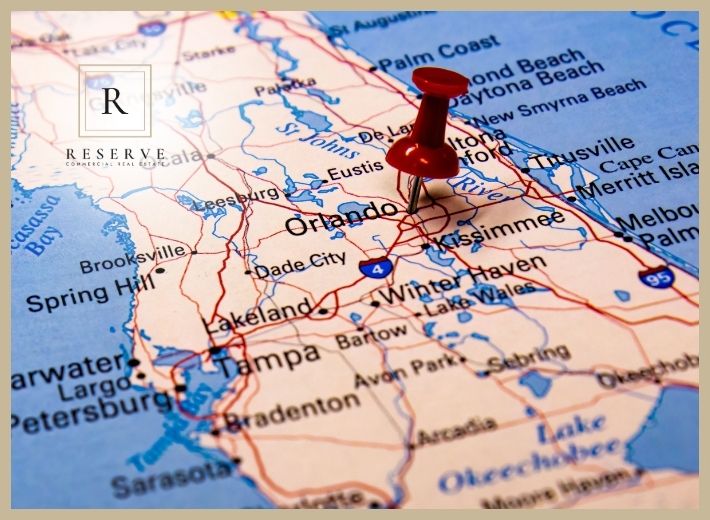
There was a time when “Florida office market” meant law firms, banks, and healthcare. That’s changed. Some of the biggest names in tech have been packing up their California and Colorado headquarters and planting flags in Miami, Boca Raton, and West Palm Beach — and they’re not coming for the beaches. They’re coming for talent, taxes, and space they can actually grow into.

If you’re a business owner watching this from the sidelines, here’s what’s really happening — and why it matters for anyone who needs office space in this market.

The Names Making the Move

Palantir — the data analytics firm valued at over $300 billion — moved its global headquarters from Denver to Miami. D-Wave Quantum is relocating its headquarters and primary U.S. research facility from Palo Alto to the Boca Raton Innovation Campus, taking roughly 25,000 square feet. Iru committed to about 92,000 square feet in Coconut Grove for a major East Coast headquarters, one of the largest office deals Miami has seen recently. And Adaptive Security, an AI cybersecurity firm, grabbed a 51,000-square-foot sublease downtown.

Notice something about that last one? A sublease. Even companies with serious funding are finding that the smartest way into this market is often through space another tenant already built out.

Why They’re Coming

It’s not one thing. It’s the stack: no state income tax, a deep and growing talent pool as more professionals relocate, direct flights to New York and Latin America, and a business climate that moves fast. Once a few anchor companies land, their vendors, partners, and competitors follow. That’s exactly what’s playing out from Brickell up through West Palm Beach.

There’s also a simple math problem driving these decisions. A company paying California or Manhattan rents — plus the salary premiums it takes to keep people there — can move to Southeast Florida, pay its team well, and still come out ahead. Founders figured that out first. Their boards caught up fast.

The Talent Follows the Companies — Then More Companies Follow the Talent

Here’s the flywheel most people outside the industry don’t see. Every headquarters relocation brings engineers, salespeople, and executives who put down roots. Some of them eventually leave to start their own firms — and they start them here, because this is where their networks live now. That’s how a market goes from “a few big relocations” to a genuine business ecosystem, and it’s why the demand for office space isn’t a blip. Each move makes the next one easier to justify.

West Palm Beach is the clearest example. What started as spillover from Miami has become its own destination, and developers have noticed — more than a million square feet of new office space is in the pipeline there, alongside major new towers going up in Brickell. New inventory is coming, but it’s coming at top-of-market rents. That detail matters for what comes next.

What This Means If You Need Space Here

When big tech signs big leases, the ripple effects hit everyone. Quality space gets absorbed faster. Landlords get less flexible on Class A buildings. But — and this is the opportunity — sublease space becomes gold for smaller companies. Businesses that overcommitted or restructured leave behind built-out, furnished offices at rates well below what a direct lease would cost. You skip the construction timeline, skip most of the capital outlay, and walk into space a Fortune 500 tenant already spent millions finishing.

That’s where working with someone who knows this market day-to-day pays for itself. The best sublease opportunities in Southeast Florida rarely sit on the open market for long — many are gone before they’re ever publicly listed.

Frequently Asked Questions

Is it too late to get good office space in Southeast Florida?

No — but the easy pickings are gone. Well-priced space is still out there, especially subleases, but it moves quickly. Having a broker who hears about space before it’s listed is the difference-maker.

How do Southeast Florida office costs compare to New York or California?

Direct Class A rents in Miami have climbed with demand, but they still generally undercut prime Manhattan and San Francisco space — and subleases can come in dramatically lower than any of them. Factor in the tax savings and the total cost gap widens further.

Are subleases risky?

Not when they’re structured right. You need to understand the master lease terms, the remaining term length, and the financial health of the original tenant. That’s standard due diligence we handle on every deal.

Which submarket is right for my company?

Depends on your team and your clients. Brickell and downtown Miami offer density and prestige. Boca Raton delivers value and a growing tech cluster. West Palm Beach is the fastest-rising market, with new inventory on the way.

Let’s Talk About Your Space

With more than 20 years in Florida commercial real estate, Newmark Commercial has watched this market through every cycle — and right now is one of the most interesting moments we’ve seen. The companies relocating here did their homework before they moved. Do yours before you sign anything — starting with a conversation about what’s actually available, not just what’s listed.

Whether you’re relocating, expanding, or looking for a sublease that fits your budget, we’ll help you move before the market does.

**Contact Newmark Commercial or call 561-702-8187** to start the conversation.

Logistics Real Estate in South Florida: What It Is, the Different Types, and Why It Matters for Your Business

If a product reaches a doorstep in Miami, Fort Lauderdale, or West Palm Beach within a day of being ordered, a piece of logistics real estate made it happen. Behind nearly every supply chain sits a building — a warehouse, a distribution center, a cold-storage facility — quietly doing the work of keeping goods moving. As South Florida cements its role as one of the most important trade gateways in the Americas, understanding logistics real estate has become essential for any business that stores, ships, or sells physical products.

At Newmark Commercial, we’ve spent more than 20 years helping South Florida businesses, owners, and investors navigate the commercial real estate market. This guide breaks down what logistics real estate is, the different types you’ll encounter, and what makes our region one of the country’s most competitive industrial markets.

What Is Logistics Real Estate?

Logistics real estate refers to commercial buildings designed for storing, handling, and distributing goods. It’s a category of industrial property that includes warehouses, distribution centers, and fulfillment centers — the physical infrastructure that supply chains run on. Businesses of every size, from a local retailer to a global manufacturer, depend on logistics space to operate efficiently.

Unlike office or retail space, logistics property is valued less for its appearance and more for its function: ceiling height, loading-dock access, floor strength, truck-court depth, power capacity, and — above all — location relative to highways, ports, airports, and customers.

Why South Florida Is a Logistics Powerhouse

Few regions in the country combine as many logistics advantages as South Florida. The tri-county market — Miami-Dade, Broward, and Palm Beach — sits at the crossroads of domestic and international trade.

  • Gateway to Latin America and the Caribbean. PortMiami and Port Everglades are among the busiest cargo ports in the Southeast, making the region a natural hub for goods moving between the U.S. and dozens of trading partners to the south.
  • World-class air cargo. Miami International Airport is consistently one of the top U.S. airports for international freight, especially for perishables, pharmaceuticals, and high-value goods.
  • Highway connectivity. Interstate 95, Florida’s Turnpike, and I-75 link the coast to the rest of the state and the eastern seaboard, supporting both long-haul and last-mile distribution.
  • Dense, growing population. Millions of residents and a steady stream of new arrivals create constant demand for fast, local delivery — fueling the need for infill warehouses close to where people live.

That mix of trade, transportation, and population density is exactly why logistics space here is in such high demand — and why site selection requires local expertise.

The Different Types of Logistics Real Estate

“Logistics real estate” is an umbrella term. Each property type serves a different role in the supply chain, and choosing the right one depends entirely on what your business actually does.

Warehouses — Large buildings used for storing goods (finished products, raw materials, or inventory). They’re typically located near major transportation hubs and form the backbone of most distribution networks.

Distribution Centers — More active than a basic warehouse, distribution centers are built for sorting, packaging, and shipping. They’re equipped with loading docks, conveyor systems, and materials-handling equipment to move goods out to retailers and consumers quickly.

Fulfillment Centers — Smaller, tech-forward facilities focused on picking, packing, and shipping individual orders — the engine behind e-commerce. They’re usually positioned near major metro areas so online orders reach customers fast.

Cross-Docking Facilities — Designed for speed rather than storage, cross-dock facilities transfer goods directly from one truck to another with minimal time in between — ideal for keeping freight moving across the region and the country.

Cold-Storage Facilities — Temperature-controlled warehouses for goods that require refrigeration: food, produce, pharmaceuticals, and other sensitive products. Given South Florida’s role in perishable imports and its dense population, cold storage is one of the most sought-after — and undersupplied — categories in the market.

Micro-Fulfillment Centers — Compact facilities placed inside or near dense urban areas to support same-day and next-day delivery. As shoppers expect faster delivery windows, these last-mile nodes are becoming increasingly valuable across South Florida’s cities.

How to Choose the Right Logistics Site in South Florida

The right building in the wrong location can quietly drain a business through higher transportation costs and slower delivery times. When we help clients evaluate logistics property, these are the factors that matter most:

Proximity to transport hubs How close is the site to Port Miami, Port Everglades, Miami International Airport, I-95, and the Turnpike? Minutes saved here compound over thousands of shipments.
Proximity to your market If you serve local consumers, an infill site near population centers beats a cheaper one far from your customers.
Labor availability Logistics operations need staff. A strong local labor pool keeps facilities running and hiring manageable.
Zoning & permitting Confirm the site is zoned for your use and that truck traffic, hours, and noise are permitted — early due diligence prevents costly surprises.
Building specs Clear height, dock count, truck-court depth, floor load, and power capacity determine whether a building fits modern — and automated — operations.

Trends Shaping the Market

  • Automation. Robotics and automated picking and packing systems are increasingly common. Buildings with clear height, mezzanine capacity, and strong floor loads are best positioned to support them.
  • Sustainability. Solar panels, energy-efficient lighting, and water-management systems are becoming standard expectations as operators work to cut both emissions and operating costs.
  • Last-mile and infill demand. The push for same-day delivery keeps demand high for smaller facilities close to dense neighborhoods — a defining feature of the South Florida market.
  • Cold storage growth. Structurally undersupplied and expensive to build, refrigerated space remains one of the most resilient corners of the logistics market.

Challenges to Plan For

South Florida’s strengths come with real constraints. Demand consistently outpaces supply, which keeps rents and land prices high. Available industrial land is limited, especially in prime infill locations, and construction costs make new development expensive. Skilled labor can be difficult to secure. None of these are reasons to avoid the market — but they are reasons to enter it with a knowledgeable local partner who can help you weigh trade-offs before you commit.

“In South Florida, logistics real estate isn’t just about square footage — it’s about minutes. The right location near a port, the airport, or a major highway can transform how efficiently a business runs. Our job is to help clients find the building that actually fits their operation, not just the one that’s available.”
— The Newmark Commercial Team

Frequently Asked Questions

What’s the difference between a warehouse and a distribution center?
A warehouse primarily stores goods, while a distribution center is built for active movement — sorting, packing, and shipping products out quickly. Many businesses need a blend of both.

Is South Florida a good place for a logistics business?
For most product-based businesses, yes. The combination of major seaports, a top international airport, strong highway access, and a large local population makes the region one of the most strategic logistics markets in the country — though space is competitive.

Should I lease or buy logistics space?
It depends on your capital, growth plans, and how long you intend to stay in a location. Leasing offers flexibility; ownership can build long-term equity and control. We help clients model both before deciding.

How far in advance should I start looking?
Because quality industrial space in South Florida moves fast, it’s wise to begin the search several months ahead of when you need to occupy. Early planning gives you room to negotiate rather than settle.

Find the Right Logistics Space — Let’s Talk

Whether you’re searching for a warehouse, scaling into a distribution center, or weighing an investment in South Florida industrial property, the right guidance makes all the difference. With more than 20 years of experience in the local commercial market, the team at Newmark Commercial is ready to help you find a space that fits your operation and your goals.

➤ Contact Newmark Commercial today to start the conversation.
📞 Call us: 561-702-8187

Palm Beach County’s Business Momentum Is Real — and It’s Reshaping Commercial Real Estate

Palm Beach County is entering 2026 with a level of confidence that’s hard to ignore. According to the Palm Beach County Business Outlook 2025, local executives are signaling optimism, expansion plans, and strategic investments that point to sustained economic strength — and meaningful opportunity for commercial real estate owners, investors, and occupiers.

At Newmark Commercial, we help clients turn these market signals into smart, actionable real estate decisions.

Business Confidence Is Fueling Market Activity

More than two-thirds of Palm Beach County business leaders expect economic conditions to improve in the coming year, while over half report that conditions are already better than last year. That optimism matters — because confidence drives hiring, expansion, relocation, and investment.

For commercial real estate, this translates to:

  • Increased leasing velocity
  • Greater demand for high-quality office, industrial, and mixed-use space
  • Stronger fundamentals supporting long-term investment decisions

Newmark Commercial works directly with tenants, landlords, and investors to position them ahead of these shifts — whether that means securing the right space, maximizing asset value, or identifying emerging opportunities before they become crowded.

Workforce Growth Is Changing How Space Is Used

Hiring remains a major priority across Palm Beach County, with a majority of businesses planning to increase staff and source talent locally. At the same time, flexible and hybrid work models are becoming more common, reshaping how companies think about office design, location, and lease structures.

Today’s businesses are prioritizing:

  • Collaborative, amenity-rich environments
  • Flexible layouts that support both in-office and hybrid teams
  • Locations that help attract and retain top talent

Newmark Commercial advises companies on how to align their real estate strategy with workforce goals — from right-sizing office footprints to negotiating flexible lease terms that support future growth.

Investment Is Flowing Toward Technology and People

The outlook shows a clear shift in where businesses are allocating capital: technology upgrades, compensation, marketing, and training are all rising priorities. For commercial real estate, that means growing demand for properties that are modern, adaptable, and infrastructure-ready.

This creates opportunity across multiple asset classes, including:

  • Tech-enabled office and flex space
  • Industrial and logistics facilities supporting operational growth
  • Mixed-use developments that support live-work dynamics

At Newmark Commercial, we connect these evolving business needs with the right real estate solutions — helping investors and occupiers future-proof their portfolios.

Challenges Create Strategic Opportunities

While optimism is strong, executives also point to real challenges — particularly housing affordability and talent recruitment. These pressures are increasingly influencing site selection, development strategy, and long-term planning.

For investors and developers, this reinforces the value of:

  • Mixed-use projects that integrate commercial and residential components
  • Locations that balance accessibility, livability, and cost
  • Thoughtful asset positioning that supports workforce stability

Newmark Commercial brings market insight, local expertise, and strategic advisory together to help clients navigate these complexities with confidence.

Why Newmark Commercial

Palm Beach County’s business momentum isn’t theoretical — it’s active, measurable, and shaping real estate decisions right now. Working with the right commercial real estate partner makes the difference between reacting to the market and leading within it.

Newmark Commercial provides full-service commercial real estate advisory across South Florida, including tenant and landlord representation, investment sales, site selection, and strategic consulting.

Whether you’re planning an expansion, evaluating an acquisition, repositioning an asset, or exploring your next move, our team is here to help you capitalize on what’s next.

📞 Call Newmark Commercial at 561-702-8187
🌐 Learn more at https://reservecre.com/

Source: Kaufman Rossin & Business Development Board of Palm Beach County — Palm Beach County Business Outlook 2025
https://mma.prnewswire.com/media/2835341/Kaufman_Rossin_Palm_Beach_County_Business_Outlook.pdf?p=pdf

A Strategic Opportunity in One of Florida’s Fastest-Growing Commercial Markets

Spotlight on 15877 SW 484, Dunnellon / Ocala, Florida

Marion County has firmly established itself as one of Florida’s most dynamic and sought-after commercial real estate markets—and 2025 proved it beyond doubt. With over $1 billion in commercial real estate sales recorded in a single year, investors and business owners are increasingly turning their attention to Ocala and its surrounding growth corridors.

Located along SW 484 in Dunnellon, just minutes from Ocala’s expanding commercial and logistics footprint, 15877 SW 484 represents a timely opportunity for buyers and investors seeking to secure property in a market defined by momentum, infrastructure investment, and long-term upside.

Marion County by the Numbers: A Market on Fire

According to records from the Marion County Clerk of Courts, the 162 largest real estate transactions in 2025 generated approximately $1.02 billion in sales, underscoring the depth and diversity of demand across the region.

Key highlights include:

  • 162 properties sold for $2 million or more
  • Top 25 transactions exceeded $8 million each
  • Top 15 sales surpassed $10 million
  • Four properties sold for more than $40 million

The year’s largest transaction belonged to Amazon, which invested $97.6 million in a 1,085,280-square-foot fulfillment center in northwest Ocala—solidifying the region’s role as a major logistics and distribution hub.

Other landmark transactions included:

  • Paddock Mall – $54.9 million
  • Gaitway Plaza – $42.25 million
  • Retreat at 42nd Apartments – $50.15 million
  • Niagara Bottling acquisition – $25.78 million

From equestrian estates and shopping centers to industrial, retail, and multifamily assets, Marion County continues to attract institutional buyers, national brands, and long-term investors.

Why Dunnellon & SW 484 Matter

As Ocala’s core continues to expand, surrounding areas like Dunnellon are emerging as strategic alternatives for businesses seeking accessibility without sacrificing scale or flexibility. Properties along SW 484 benefit from:

  • Proximity to major highways and Ocala’s commercial core
  • Strong demand from logistics, service, retail, and mixed-use users
  • A growing population base supporting long-term development
  • Increasing attention from investors priced out of primary corridors

15877 SW 484 is well-positioned to capitalize on these trends, offering buyers an opportunity to secure property in a market that continues to outperform expectations.

A Property Positioned for Growth

In a county where Amazon, national retailers, healthcare operators, and multifamily developers are committing tens of millions of dollars, properties like 15877 SW 484 stand out as forward-looking investments—ideal for business owners, developers, or investors seeking exposure to Marion County’s sustained expansion.

Whether your goal is owner-occupancy, land banking, or long-term investment, this property offers location, accessibility, and timing that align with the region’s strongest growth drivers.

Why Work With Reserve Commercial Real Estate

Navigating a competitive and fast-moving market requires more than access to listings—it demands experience, strategy, and advocacy.

“We create real estate opportunities and solutions for buyers, sellers, tenants, landlords, and investors—and negotiate advantageous terms on their behalf.”
— Reserve Commercial Real Estate

With over 20 years of commercial real estate expertise, Newmark Commercial helps clients:

  • Avoid costly contract and zoning mistakes
  • Secure favorable purchase and lease terms
  • Identify off-market and under-the-radar opportunities
  • Focus on their business while we manage the details

From buyer and tenant representation to investment and consulting services, our team works across industries including retail, medical, office, industrial, and mixed-use properties.

Let’s Talk About Your Next Move

In a market where over $1 billion in high-value transactions closed in a single year, timing and representation matter more than ever.

If you’re interested in learning more about 15877 SW 484, Dunnellon / Ocala, FL, or exploring other opportunities in Marion County, Reserve Commercial Real Estate is ready to advocate for you—every step of the way.

Let us find the right property, negotiate the right terms, and help your business continue to grow.

👉 Schedule a call today and take advantage of Ocala’s momentum.

What Is a Sublease Agreement — and How Does It Work?

When businesses change, whether expanding, downsizing, or temporarily relocating, subleasing can be a flexible solution for tenants, subtenants and landlords. But without a properly structured agreement, it can also open the door to confusion, financial exposure, and legal disputes.

At Reserve Commercial Real Estate, we go beyond simply connecting parties. We help ensure that every client…tenant, subtenant, or landlord…fully understands and protects their position throughout the sublease process.

How a Sublease Agreement Works

A sublease agreement (sometimes called a sublet) is a legally binding contract that allows an existing tenant to rent out all or part of their leased property to another tenant. The original tenant becomes the sublessor, while the new occupant is the sublessee.

Even when subleasing is permitted under the original lease, the primary tenant remains responsible for rent payments, maintenance, and compliance with lease terms. If a subtenant fails to pay, damages the property, or violates the lease, the landlord still looks to the original tenant for resolution.

That’s why having an experienced commercial real estate professional — one who understands both the financial and legal nuances of subleasing — can be invaluable.

“My role isn’t just to find space,” says Jacqueline Newmark-Tavares, Founder of Reserve Commercial Real Estate. “I make sure every agreement, whether new or sublet, is structured with intention, transparency and no ambiguity”

Key Elements Every Sublease Agreement Should Include

When structuring or reviewing a sublease, these are the most important sections to cover:

  • Contact Information: Full legal names, business entities, addresses, and contact details for both parties.
  • Reference to the Original Lease: Attach or reference the master lease so that both parties are aware of all governing terms and restrictions.
  • Rent & Payment Details: Amount, due date, payment method, and any late fee provisions.
  • Term of the Sublease: Exact start and end dates, with any renewal options clearly stated.
  • Security Deposit: Amount held, conditions for refund, and responsibilities for property condition.
  • Rules & Restrictions: Any policies regarding signage, alterations, use of premises, pets, smoking, or guests.
  • Landlord Consent: Written approval from the landlord is often required before a sublease is valid. This can be a complicated area, depending on the lease language.
  • Utilities & Maintenance: Clarify which party covers which costs — from repairs, electricity to janitorial services.
  • Furnishings or Fixtures: If any assets remain with the space, list them to prevent later disputes.

Jacqueline and her team frequently assist clients in reviewing these agreements, ensuring alignment with lease obligations.

Common Questions About Subleasing

Is subleasing risky?
It can be — particularly if the sublease isn’t structured properly. The original tenant remains financially responsible, even if the subtenant defaults. A well-crafted agreement minimizes that risk.

Do I need my landlord’s permission?
In most cases, yes. Even if the lease allows subleasing, written consent from the landlord is typically required to formalize the arrangement. This can be a complicated area. 

How do I find a reliable subtenant?
Beyond advertising, conduct credit checks, review financials, and verify business history. Jacqueline often assists clients in vetting and negotiating with potential subtenants to ensure compatibility and stability.

Who pays rent to whom?
The subtenant usually pays the original tenant, who then continues to pay the landlord as usual. This ensures continuity and accountability.

Work With a Trusted Commercial Real Estate Partner

Subleasing can be a strategic move — but only if it’s done correctly. Whether you’re a tenant seeking flexibility, a landlord managing occupancy, or a business looking for short-term space, Reserve Commercial Real Estate can guide you through every step.Serving Boca Raton and South Florida
561-702-8187

www.NewmarkCommercial.com


The warehouse real estate sector is seeing a rebalance. Here’s what to watch for

As the warehouse sector moves from boom to balance—cooling rent growth, rising vacancies in some big-box markets, and new demand drivers like power, proximity and reshoring—investors are reassessing risk, return, and where to deploy capital next. This reset can unlock compelling opportunities, but it also raises questions about which assets, locations, and lease profiles will outperform in the next cycle. At Reserve Commercial Real Estate, we go beyond headline trends, helping warehouse investors interpret the data, underwrite risk, and structure strategies that protect today’s income while positioning portfolios for long-term growth.

A version of this article first appeared in the CNBC Property Play newsletter with Diana Olick. Property Play covers new and evolving opportunities for the real estate investor, from individuals to venture capitalists, private equity funds, family offices, institutional investors and large public companies. Sign up to receive future editions, straight to your inbox.

After a pandemic-driven surge, and a subsequent pullback, warehouse real estate supply and demand is finally starting to come into balance and showing new signs of life. 

E-commerce, which was the primary driver of the recent boom cycle, certainly hasn’t gone away, but more people are returning to brick and mortar. Warehouse tenants are now more focused on efficiency, power and location than they are on square footage. 

New development has slowed down, and federal policies are pushing onshoring of manufacturing, which helps the sector counter still-high interest rates and economic uncertainty. Rent increases are no longer as steep as they were a few years ago, and in some markets they are actually falling slightly due to oversupply.

Industrial property rents are showing signs of stabilization, indicating a more balanced market environment,” said Judy Guarino, managing director of commercial mortgage lending at JPMorgan Chase, in a note to investors.

Here’s what to watch for in warehouses in 2026. 

Big-box

The big-box subsector refers to large, modern distribution and warehouse facilities that serve as hubs for logistics, storage and e-commerce fulfillment. It makes up about a quarter of the total industrial warehouse space in the U.S. 

Vacancies are close to cyclical peaks and new construction is contracting, according to industry data. In the first half of this year, new supply still outpaced new demand, but the gap shrank, according to new research from Colliers. Third-party logistics firms, including delivery services such as Ryder and DHL moving goods on behalf of a client, are leading that demand.

“The third-quarter demand has far exceeded the entire first half of the year, which is another really strong indicator that the supply and demand is starting to get more into a balanced state,” said Stephanie Rodriguez, national director of industrial services at Colliers. 

Across the 20 largest markets, the overall big-box vacancy rate rose 19 basis points to 11% during the first half of the year, according to Colliers. New supply totaled 48 million square feet in the first half of 2025, much less than the 330 million square feet completed at the height of the cycle in 2023. Rents are expected to stabilize in the near term before starting to grow again. 

Big-box is a major segment of the overall warehouse real estate market, particularly driven by demand from online retailers and companies seeking efficient supply chain operations. Recent economic and tariff policies have definitely shaken that demand, but as those policies settle, more demand could return. Lower interest rates would be another driver. 

Supply chain

Supply chain, which relies heavily on warehouse real estate, is also seeing something of a transformation that could increase demand. In a report titled “Bold Predictions for 2026,” Prologis, the world’s largest logistics real estate company, cited specific supply chain trends to watch, including forecasts that:

  1. E-commerce companies will make up nearly 25% of new leasing next year as the proportion of goods sold online rises to almost 20% globally by year-end.
  2. The need for power-ready logistics facilities capable of supporting automation and manufacturing will be a top-three factor globally in location selection.
  3. Defense-related demand in the U.S. and Europe will breathe new life into older industrial corridors and produce a new class of specialized logistics assets.
  4. Shrinking trucking capacity will drive double-digit rate hikes in 2026, making transportation an even larger share of total supply chain spend and amplifying the value of well-located logistics real estate.

Power

Power is emerging as a leading driver across real estate portfolios. Beyond the usual narrative of e-commerce and the data center sector, power availability and network densification are becoming important pricing catalysts, according to a recent report from Hines, a global real estate investment manager.

“While re/near-shoring demand continues to pick up speed, albeit slowly and with somewhat uneven impact, opportunity also lies in power-advantaged infill assets that support faster and denser networks; where distance once drove advantage, closeness now creates it,” according to the Hines report. 

Reshoring

Further research from Hines shows that warehouse net absorption has correlated to manufacturing construction spend. 

“This trend highlights another potential source of demand not only for industrial manufacturing facilities, but for the warehouse subsector as well,” according to its report, which predicts reshoring alone could increase overall warehouse demand over the next five years by roughly 35%.

“Despite the volatility in the macroeconomic landscape, driven by interest rate and trade policy uncertainties, industrial properties near ports remain vital,” Guarino said. “Tariffs may lead to higher costs and supply chain challenges, but these locations are key to maintaining supply chain resilience and adapting to trade shifts.”

Proximity

One example of the proximity advantage: Amazon. Its logistics real estate strategy mirrors a broader national trend, prioritizing efficiency, automation and consumer proximity over sheer scale, according to a note from CoStar.

“It’s an interesting inflection point for industrial developers and REITs that rode the pandemic-era boom,” wrote Juan Arias, CoStar Group’s national director of industrial analytics. 

Arias highlighted a leasing slowdown, noting that this year Amazon has occupied just 61 logistics properties, down from 100 in 2024 and as many as 300 in recent years. Its demand for larger footprint facilities hit a seven-year low, but it is still drawn to newer, taller buildings, with an emphasis on modern, efficient distribution centers, Arias said.

AI

As with everything else, artificial intelligence and property technology are making an imprint on the warehouse sector as well. They are helping owners and operators to analyze supply chains, traffic patterns and data more efficiently — particularly important in identifying potential warehouse locations. They are also helping to manage inventory and predict maintenance needs, both of which reduce costs. 

Reserve Commercial Real Estate sets the gold standard in identifying prime investment opportunities tailored to your vision. Whether you’re an experienced warehouse investor or new to the real estate landscape, our team brings unmatched expertise and a client-focused approach to ensure your goals are met. With a proven track record and access to the most promising markets, we make navigating the complexities of real estate seamless and rewarding. Partner with Newmark today and take the first step toward making your real estate ambitions a reality! Call us at 561.702.8187 or join our Instagram community here.

Reference: [https://www.cnbc.com/2025/11/28/warehouse-real-estate-rebalance.html]

11 Expert Tips For Finding The Perfect Office Space

Finding the right office space isn’t just about square footage or a nice address. It’s about building a place where your team and business can grow. You’ll want to look at basics like location, accessibility, lease terms, and how the space can scale with you. But today, there are new factors to weigh too. Hybrid work setups, wellness-focused amenities, and strong tech infrastructure all play a big role in how well an office supports productivity and culture. Sorting through these details can feel overwhelming, which is why many companies turn to Real Estate Analysis Services. With the right guidance, you can cut through the noise, spot the best opportunities, and secure a space that fits your goals now and in the future.

It can be a challenge when looking to find that perfect office space to operate your new business out of. You want to have all the amenities you need to function, but you don’t want to be saddled with a sky-high lease payment.

Keeping your rent terms and costs in check can make the difference in whether or not your business stays afloat or struggles financially. However, finding everything you need in an office space without skimping is a fine line to tread.

To help, 13 members of Forbes Real Estate Council share their best advice for small businesses looking to find the perfect office space. Here’s what they recommend:

1. Stop Looking For ‘Perfect’

The “perfect” office space doesn’t exist! Make a list of what’s important to you and rate office space you are looking at against that. Be practical and don’t waste a lot of time trying to find perfect. Especially at the small business stage, I’ve seen companies waste a lot of money on “fancy” offices that hurt their profitability—and then moved out of them 12 months later as they grew.

2. Go Where Your Customers Are

Most people skip this criteria because they’re not in retail. However, if I’m in real estate, I want my office to be next to all of the brokers, mortgage brokers, lenders and property managers in my city. Identify who your “customer” is and where most of them are located.

3. Start Small

Keep costs at a minimum even if it means sharing a desk with someone or working from a hallway. The last thing you want to do is spend money on a fancy office and furniture. You want to wait until you start generating revenue before you do that. So consider a shared workspace where you’re not tied to a commercial lease. You can expand as needed and retract if the sales aren’t there.

4. Consider Communal Spaces

Take a look at co-working spaces. You may find business partners and other small business owners with whom you can share information. The one I’ve used has all sorts of offices, so think about whether you work best in a quiet space or an open-plan room, and make sure they have that option for you and your team.

5. Optimize Around Commute And Compensation

I would use your team’s commuting methods, estimated travel times and salaries to algorithmically identify a location that minimizes the commute times of your core team members. Less time traveling means more time at work and with their families, improving both productivity and work-life balance.

6. Identify Your Top Priorities

Often, you can’t have it all, so it’s critical to determine what’s most important to you and your company. I find that commute-distance from the talent pool, having restaurants and other conveniences nearby, and amenities such as bike storage and plenty of cheap or free parking help as well. It goes without saying that things like internet, building security, etc. are a must.

7. Maximize All Hours Of The Day

Be open to finding space that can be used not only for business, but also be utilized after hours—have the space to host network events and educational opportunities to connect with the community and provide business development. Consider looking for open space where desks or tables can be moved to adapt for different needs.

8. Look At The Big Picture, Not Just The Rent

For example: Flexibility in the lease such as an expansion option is key if you plan to grow, so you are not stuck with a space you’ve outgrown or forced to sublease before you can relocate. Another important factor is maintenance and repairs, as those costs can often outweigh monthly rent if an issue arises, the tenant is responsible for the cost and the landlord has deferred maintenance in the past.

9. Consider Included Parking

Make sure you consider and ask the lessor how many parking spaces per thousand square feet are included. Then think about your staff parking needs and those of your customers. Is what is offered by the lessor enough? How much is additional parking, and where is it? This will help you determine your real rent.

10. Look At The Layout

When choosing an office space for your small business, you should consider how the space is laid out. We recently changed office space and even though the new space is smaller, the layout is more efficient for the team. Natural light is also a bonus—no one wants to feel like they are working in a cave all day!

11. Focus On Flexibility

Look for a space with flexibility—flexible lease terms and flexible growth options. When you are small and just starting out, the future is unknown. You hope to grow quickly but if that doesn’t pan out, you don’t want to be locked into a costly, long-term lease. That is why co-working has become so popular: It allows for flexible lease terms and provides space to grow and contract without penalty.

The right space can inspire your team, impress your clients, and position your business for growth—but only if it aligns with your goals and is secured on favorable terms. That’s where Jacqueline Newmark-Tavares of Reserve Commercial Real Estate comes in. With over two decades of experience representing office and retail tenants, Jacqueline helps businesses find locations that fit their vision while protecting their interests at the negotiating table.

If you’re exploring your next office space—or simply want expert insight before making a move—contact Jacqueline at JNewmark@NewmarkCommercial.com or visit reservecre.com/ to start the conversation.

Mindy’s Munchies Move-In: Selecting the Perfect Location for a Franchise Dessert Shop

Opening a franchise sweets and dessert shop is exciting, but its success heavily depends on selecting the proper location. Choosing the ideal space requires balancing market insights, customer accessibility, and operational efficiency — a process that can be daunting without expert guidance. At Reserve Commercial Real Estate, we specialize in helping businesses like Mindy’s Munchies find locations that align perfectly with their goals and brand identity. Here are the key factors to consider when choosing a location for a sweets and dessert franchise:

Understanding the Target Market

The first step is identifying your target demographic. Sweets and dessert shops often appeal to families, businesses needing platters and gifting, young professionals, and kids having birthday parties, making areas with high foot traffic and family-friendly amenities ideal. Consider neighborhoods near schools, parks, or shopping centers to maximize visibility and accessibility to your key audience.

Assessing Foot Traffic and Visibility

Visibility and accessibility are critical for walk-in businesses like dessert shops. High foot traffic areas, such as bustling downtown streets, malls, or busy shopping plazas, ensure that your shop attracts attention from passersby. The right location draws customers and builds brand awareness through its prominent presence.

Competition Analysis

While competition can indicate demand, it is essential to avoid oversaturated areas. A detailed market analysis can help you gauge the density of similar businesses nearby. Strategically placing your shop in an area with limited direct competition while complementing existing companies — such as coffee shops or casual dining restaurants—can boost sales.

Space Layout and Amenities

The physical space should align with your operational needs and brand image. Ensure the location has adequate space for each employee, all operations, and storage. Additionally, look for modern amenities, such as proper ventilation, high-speed internet, and reliable utilities, to support daily operations efficiently.

Zoning and Compliance

Zoning regulations vary by area and can affect where your business can operate. Work with a commercial real estate expert to navigate these restrictions and ensure the location meets all legal requirements for your specific industry.

Parking and Accessibility

Ample parking and easy access are vital for attracting customers who prefer to drive. Consider locations with well-maintained parking lots or easy access to public transportation to accommodate a diverse customer base.

Future Growth and Scalability

We think beyond the immediate needs of your location. A location that allows for future expansion or additional branding opportunities that can support long-term growth.

Why Choose Reserve Commercial Real Estate?

Navigating these factors can be complex, but Reserve Commercial Real Estate is here to simplify the process. With extensive market knowledge and a proven track record of helping businesses succeed, we ensure you find a location that checks all the boxes for your business. From analyzing market trends to negotiating leases, our team provides comprehensive support to help your business thrive.

Ready to find the perfect spot for your business? Contact Reserve Commercial Real Estate today, and let us guide you to success! Call us at 561.702.8187 or join our Instagram community here.